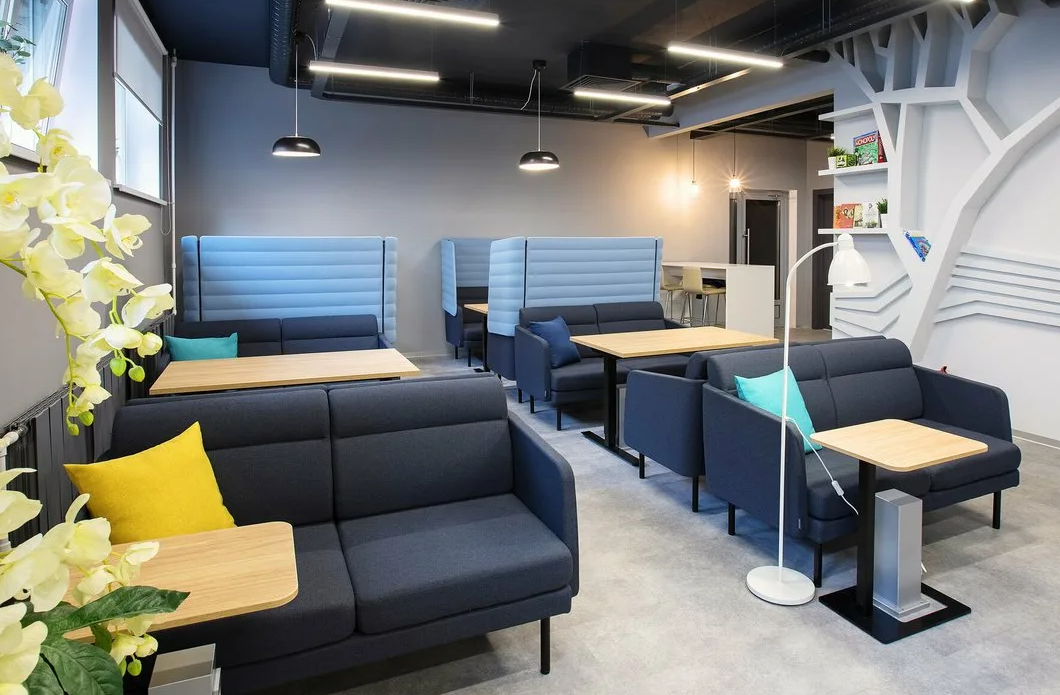
Flexible Desk Access
Members can choose work-ready desk options that match both routine and variability. Whether someone needs occasional drop-in access, a recurring weekly base, or a steadier membership pattern, our desk offering supports focused individual work with dependable connectivity, ergonomic comfort, charging access, and a calm professional setting. The atmosphere is intentionally more structured than a café and more adaptable than a conventional office, making it useful for remote employees, freelancers, and founders alike. Desk access is supported by hospitality-minded on-site standards, easy circulation through the space, and a layout that helps members move quickly between quiet concentration, informal discussion, and short breaks without losing momentum.
Private Focus Rooms
For members who need confidentiality, deep concentration, or uninterrupted calls, private focus rooms provide enclosed workspace with a more controlled environment. These rooms are suitable for consulting sessions, reporting tasks, interviews, strategic planning, and remote collaboration that cannot happen comfortably in open areas. Interiors are designed to support extended use with practical lighting, acoustic awareness, reliable internet performance, and a composed visual setting. This service gives professionals the option to work close to home while still maintaining the discretion and seriousness normally associated with a dedicated office suite, but without the long-term overhead that a private lease often requires.
Meeting Space Reservations
Our reservable meeting areas support presentations, workshops, planning sessions, interviews, and client conversations in a neighborhood setting that remains polished and efficient. Instead of moving across the city for every in-person appointment, members can host discussions in well-prepared rooms equipped for business use. This includes stable connectivity, presentation capability, comfortable seating, and a layout that supports both short tactical meetings and longer collaborative sessions. For small businesses and independent professionals, this service creates a reliable front-stage environment that helps maintain credibility, improve scheduling convenience, and reduce the time cost traditionally associated with client-facing urban meetings.
Hybrid Team Access Programs
Organizations with distributed or partially remote staff can use our team programs to place employees in practical local work hubs. This service supports rotating attendance, department-specific needs, project sprints, and regional collaboration without forcing everyone into the same city-center office every day. Employers gain a controlled, professional workspace option that helps staff stay productive and connected while reducing commute strain. Access can be structured around anticipated attendance patterns, allowing companies to scale efficiently and respond to shifts in hybrid policy. It is an effective solution for teams that need flexibility, presentation quality, and operational consistency in multiple urban districts.
Daily Support & Workspace Hospitality
A professional environment works best when the operational details feel smooth and predictable. Our daily support service includes welcome standards, practical guidance for members and guests, workspace upkeep, scheduling coordination, and general assistance that keeps the day running with less friction. Shared areas remain orderly, meeting points stay ready for use, and members benefit from an atmosphere that feels attended to rather than improvised. This service is especially valuable in flexible workspace settings because it preserves trust in the environment. People can arrive ready to work, host, focus, or collaborate knowing that the fundamentals have already been handled well.
Local Workspace Consulting for Companies
We also support companies evaluating how neighborhood-based work hubs can fit their broader urban operations. This service includes practical consultation on occupancy logic, usage planning, team distribution, and the advantages of positioning professional space closer to where employees live. For employers navigating hybrid strategy, retention concerns, and office cost discipline, localized workspace planning can offer a more resilient alternative to single-center models. Our perspective helps businesses understand how smaller, flexible district workspaces can improve attendance quality, employee experience, and operational adaptability while maintaining the professional standards expected from a modern office environment.